A new chapter in the history of Monasterio de Piedra


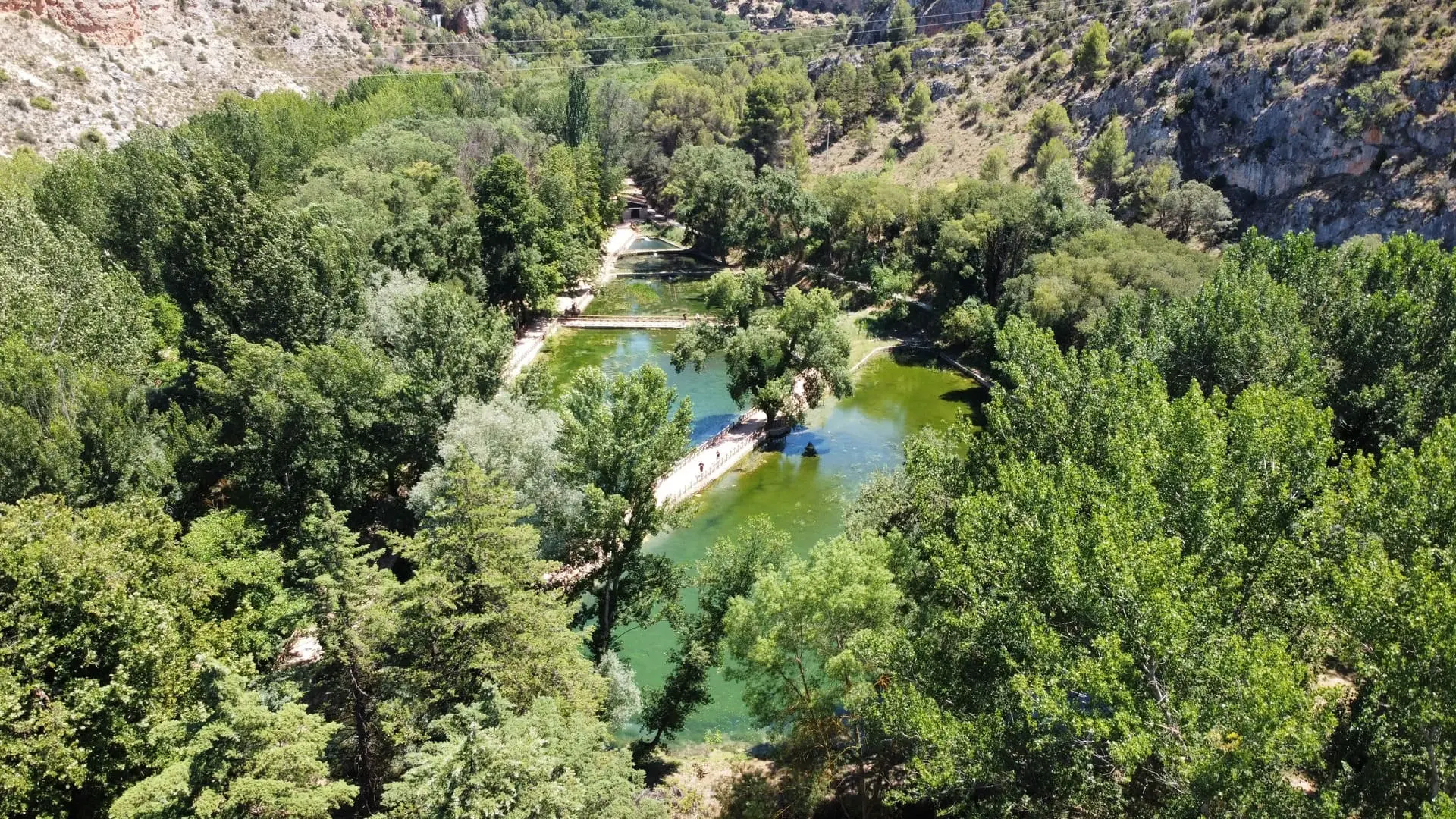
In 2026, coinciding with the bicentennial of the birth of Juan Federico Muntadas Jornet (1826–1912), the Monasterio de Piedra is expanding the route through its historic park and garden by incorporating the area surrounding the former fish farm—the first of its kind in Spain.
This heritage and environmental restoration project unveils a site of great historical and natural significance that, until now, had remained outside the accessible visitor route.
New pathways, historic ponds, restored buildings, and interpretive spaces have been integrated into the historic park and garden, bringing visitors closer to a fundamental part of the legacy of Juan Federico Muntadas Jornet.

Juan Federico Muntadas Jornet: the origin of a legacy


Juan Federico Muntadas Jornet (1826–1912) was a pivotal figure in the transformation of the Monasterio de Piedra. His vision enabled the conversion of the natural surroundings of the former Cistercian monastery into an extraordinary landscape garden, in which water, vegetation, and rock formations take center stage. His interest in nature and the utilization of the resources of the Piedra River also led to the creation of a fish farm—a pioneering initiative that contributed to the development of fish farming in Spain. Two hundred years after his birth, the Monasterio de Piedra continues to preserve and restore his legacy, incorporating new spaces that offer a deeper insight into its history.

The first fish farm in Spain


Founded in 1866 on the initiative of Juan Federico Muntadas-Jornet, the Monasterio de Piedra fish farm was the first of its kind in Spain and became a benchmark facility for the development of fish farming. The natural conditions of the Piedra River—notably the quality and consistent flow of its waters—made this site an ideal location for the breeding and reproduction of fish species, especially trout. Utilizing a hydraulic system that harnessed the natural, gravity-fed flow of water, the fish farm supplied its ponds and facilities, fostering activities that contributed to research, reproduction, and the restocking of fish populations in numerous Spanish rivers. It remained in operation for over a century, until its closure in 2016, leaving behind a significant historical, scientific, and environmental legacy.


Recovering heritage, conserving nature


The restoration of the area surrounding the former fish farm has involved a comprehensive intervention aimed at preserving its historical heritage and restoring the prominence of its natural landscape.
The work has included the recovery of ponds and fishing structures, the rehabilitation of historic buildings, the highlighting of the original hydraulic system, and the restoration of the riparian forest through the planting of native vegetation.
This initiative helps preserve the identity of the site and restores its connection to water—an essential element in the history and landscape of Monasterio de Piedra.

The expansion incorporates new paths and areas of historical, cultural, and natural interest that enrich the experience of visiting the Historic Garden Park:

The old fisheries


The ponds and channels of the old fish farm reveal how the waters of the Piedra River were harnessed for the rearing and breeding of fish, preserving the legacy of an activity that was pioneering in Spain.

Juan Federico Muntadas Jornet Space


Located in one of the recovered historic buildings, this interpretation space is dedicated to the life and legacy of Juan Federico MuntadasJornet, his connection with Monasterio de Piedra and his contribution to the creation of the Historical Park-Garden. It includes the audiovisual “The memory of water”, a journey through the history of Monasterio de Piedra narrated in first person by the Piedra River, witness of its transformation over the centuries.

Flora, Fauna, and the Piedra River


A space dedicated to discovering the natural richness of the Piedra River, its biodiversity, and the close relationship between the water, the vegetation, and the animal species that inhabit this environment.

An environment for enjoying nature


The new route invites you to stroll among ponds, pathways, and riverside vegetation, discover previously unknown spots, and enjoy a space where history and nature coexist.
The area also features rest zones, picnic tables, a children’s play area, and a space where you can grab a refreshment before continuing your visit.